

Ever tried transforming your favorite comfort food into something even better? That’s exactly what happens when you take classic lasagna and reinvent it as a soul-warming soup. Vegetarian Lasagna Soup with Zucchini captures all the rich, Italian flavors you crave while adding fresh vegetables and plant-based goodness to your bowl.
This meatless pasta soup brings together tender zucchini, robust tomatoes, creamy ricotta, and perfectly cooked pasta in a single pot. Furthermore, it offers all the satisfaction of traditional lasagna without the lengthy assembly time or heavy feeling afterward. Meanwhile, busy weeknights become manageable when you can create cozy veggie soups that taste like they simmered all day but actually come together in under 45 minutes.
Additionally, this recipe proves that healthy vegetarian dinners don’t sacrifice flavor or comfort. Instead, they add nutritious vegetables while maintaining those beloved Italian tastes. Whether you’re feeding a family or meal-prepping for the week ahead, this veggie pasta soup delivers both convenience and deliciousness in every spoonful.
Ingredients
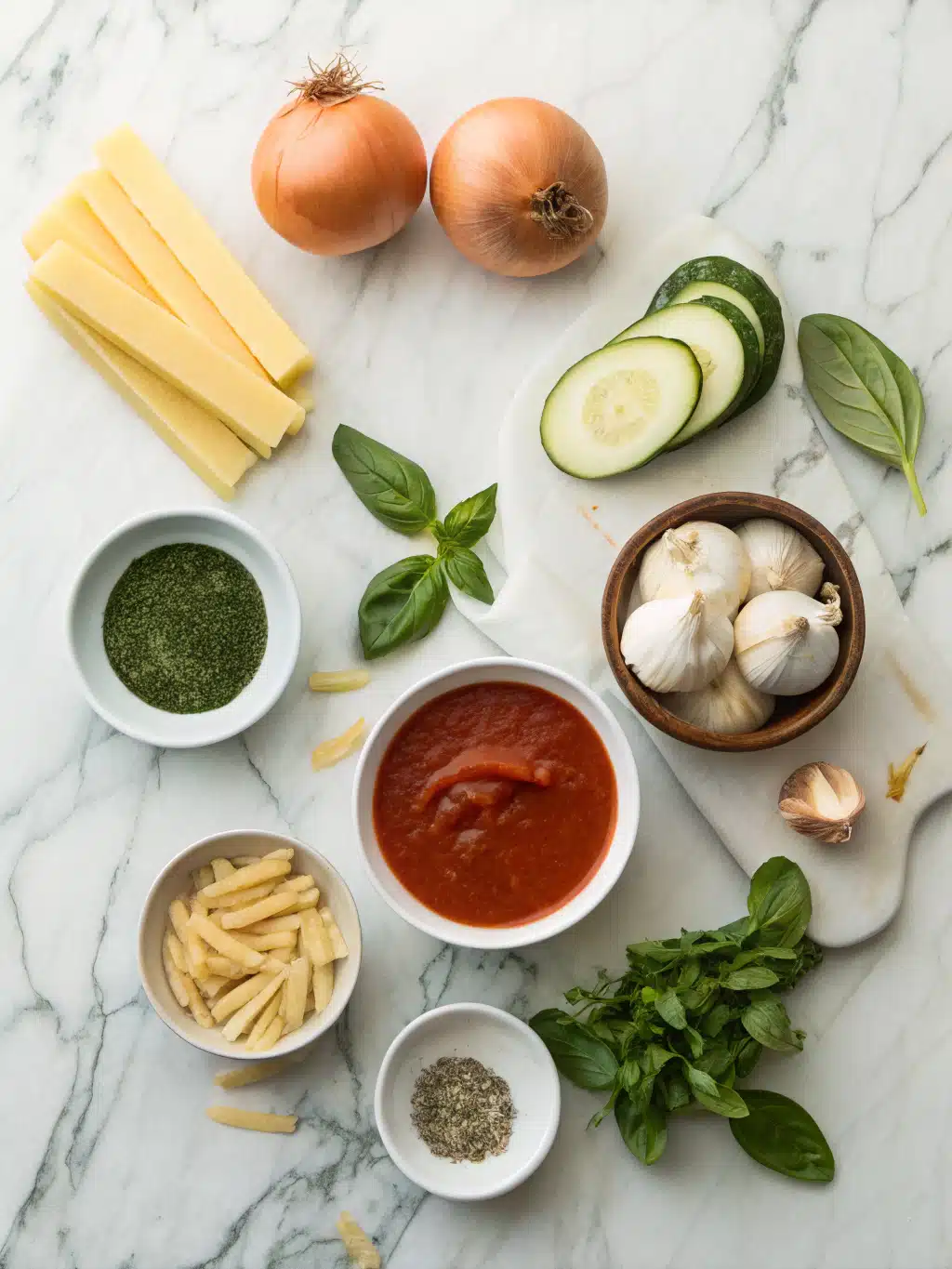
Creating this plant based Italian recipe requires fresh, simple ingredients that build incredible depth of flavor:
Base Vegetables:
- 2 medium zucchini, diced (substitute yellow squash or eggplant)
- 1 large onion, finely chopped (sweet onions work beautifully)
- 3 garlic cloves, minced (or 1 teaspoon garlic powder)
- 1 red bell pepper, chopped (orange or yellow peppers add sweetness)
Soup Foundation:
- 4 cups vegetable broth (low-sodium preferred)
- 1 can (28 oz) crushed tomatoes (San Marzano for premium taste)
- 2 tablespoons tomato paste (adds concentrated richness)
- 1 cup water (adjust for desired consistency)
Pasta and Proteins:
- 8 oz lasagna sheets, broken into pieces (substitute penne or rigatoni)
- 1 cup ricotta cheese (part-skim reduces calories)
- ½ cup mozzarella, shredded (dairy-free alternatives available)
- ¼ cup Parmesan, grated (nutritional yeast for vegan option)
Seasonings:
- 2 teaspoons dried basil (or 2 tablespoons fresh)
- 1 teaspoon oregano
- ½ teaspoon red pepper flakes
- Salt and black pepper to taste
- 2 tablespoons olive oil
Timing
This easy vegetarian soup requires minimal time investment compared to traditional lasagna preparation:
- Prep Time: 15 minutes
- Cooking Time: 25 minutes
- Total Time: 40 minutes
Remarkably, this timing represents roughly 60% less effort than layered lasagna, which typically requires 75-90 minutes including baking time. Therefore, you can enjoy the same satisfying flavors on busy weeknights when time is precious.
Step-by-Step Instructions
Step 1: Prepare Your Vegetables
Heat olive oil in a large Dutch oven over medium heat. Next, add chopped onions and cook for 3-4 minutes until they become translucent and fragrant. Then, stir in minced garlic and diced bell pepper, cooking for another 2 minutes. This foundation creates the aromatic base that makes zucchini soup recipes so appealing.
Step 2: Add Zucchini and Build Flavor
Incorporate diced zucchini into the pot, stirring frequently for 3-4 minutes until slightly softened. Subsequently, add tomato paste and cook for 1 minute, allowing it to caramelize slightly. This technique intensifies the tomato flavor and prevents any raw taste from lingering in your finished soup.
Step 3: Create the Soup Base
Pour in crushed tomatoes, vegetable broth, and water, stirring well to combine all ingredients. Season generously with basil, oregano, red pepper flakes, salt, and black pepper. Bring the mixture to a rolling boil, then reduce heat to maintain a gentle simmer.
Step 4: Cook the Pasta
Add broken lasagna sheets directly to the simmering soup. Cook for 12-15 minutes, stirring occasionally to prevent sticking. The pasta will absorb flavors while cooking, creating the signature taste that makes this veggie pasta soup so satisfying.
Step 5: Add Creamy Elements
In the final 5 minutes, dollop ricotta cheese throughout the soup without stirring completely. This creates pockets of creamy richness that mimic traditional lasagna layers. Finally, sprinkle mozzarella and Parmesan on top, allowing them to melt into the hot soup.
Step 6: Final Seasoning and Rest
Taste and adjust seasonings as needed. Let the soup rest for 5 minutes before serving, which allows flavors to meld beautifully and prevents burning your tongue on the first spoonful.
Nutritional Information
This healthy vegetarian dinner provides substantial nutrition while maintaining comfort food appeal:
| Nutrient | Per Serving (6 servings total) |
|---|---|
| Calories | 285 |
| Protein | 14g |
| Carbohydrates | 42g |
| Dietary Fiber | 6g |
| Fat | 8g |
| Sodium | 680mg |
| Calcium | 220mg |
| Iron | 3.2mg |
| Vitamin C | 45mg |
Notably, each serving delivers 28% of daily fiber needs while providing complete proteins from dairy sources. Moreover, zucchini contributes significant amounts of potassium and vitamin A, supporting heart health and immune function.
Healthier Alternatives for the Recipe
Transform this cozy veggie soup into an even more nutritious powerhouse with these smart substitutions:
Reduce Sodium: Use low-sodium broth and add fresh herbs instead of salt for flavor enhancement. Additionally, rinse canned tomatoes before using to remove excess sodium.
Boost Protein: Incorporate white beans or lentils for plant-based protein that complements the Italian flavors perfectly. Furthermore, these legumes add extra fiber and create a more filling meal.
Lower Calories: Replace ricotta with Greek yogurt for tangy creaminess with fewer calories and more protein. Similarly, use part-skim mozzarella instead of full-fat versions.
Gluten-Free Option: Substitute gluten-free pasta or use spiralized vegetables like zucchini noodles for a lighter alternative. Consequently, this modification reduces carbohydrates while increasing vegetable content.
Dairy-Free Version: Replace all dairy cheeses with cashew cream or nutritional yeast for rich, umami flavors without animal products.
Serving Suggestions
Present this meatless pasta soup in ways that delight different preferences and occasions:
Classic Comfort: Serve steaming bowls with crusty Italian bread for dipping and a simple arugula salad dressed with lemon vinaigrette. This combination balances the rich soup with fresh, peppery greens.
Elegant Dinner: Garnish with fresh basil leaves, a drizzle of good olive oil, and additional Parmesan shavings. Additionally, serve alongside roasted vegetables like Brussels sprouts or asparagus for a complete, restaurant-quality meal.
Family Style: Set up a garnish station with various toppings including extra cheese, crushed red pepper, fresh herbs, and garlic bread. This interactive approach lets everyone customize their bowl while making dinner more engaging.
Meal Prep: Portion into individual containers with separate cheese packets for work lunches. Consequently, you’ll have easy vegetarian soups ready throughout the week.
Common Mistakes to Avoid
Prevent common pitfalls that can affect your vegetarian lasagna soup success:
Overcooking Vegetables: Zucchini becomes mushy quickly, so add it later in the cooking process. Instead, maintain some texture for better mouthfeel and visual appeal.
Pasta Timing Errors: Breaking pasta sheets unevenly creates inconsistent cooking times. Therefore, aim for similar-sized pieces that cook at the same rate.
Watery Consistency: Adding too much liquid dilutes flavors significantly. Start with less broth and add more as needed to achieve your preferred thickness.
Cheese Clumping: Adding cheese to boiling soup causes it to seize and become stringy. Lower the heat before incorporating dairy products for smooth, creamy results.
Insufficient Seasoning: Taste and adjust seasonings multiple times during cooking, as pasta and vegetables absorb salt and spices.
Storing Tips for the Recipe
Maximize freshness and flavor when storing your plant based Italian recipe:
Refrigeration: Store cooled soup in airtight containers for up to 4 days. However, keep in mind that pasta will continue absorbing liquid, so add extra broth when reheating.
Freezing: Freeze portions without cheese for up to 3 months. Add fresh dairy products after thawing and reheating for best texture and taste.
Reheating Methods: Use stovetop reheating with additional broth for optimal results. Alternatively, microwave individual portions, stirring halfway through to distribute heat evenly.
Make-Ahead Strategy: Prepare the soup base without pasta and cheese, then add these ingredients when ready to serve. This method preserves texture while saving time on busy days.
Conclusion
This Vegetarian Lasagna Soup with Zucchini transforms weeknight cooking by delivering all the comfort and satisfaction of traditional lasagna in a fraction of the time. Moreover, it proves that healthy vegetarian dinners can be both nutritious and deeply satisfying without requiring extensive cooking skills or exotic ingredients.
The beauty of this recipe lies in its versatility and forgiving nature. Whether you’re new to vegetarian cooking or looking to add more plant-based meals to your routine, this soup provides a perfect starting point. Try making it this week, and don’t forget to share your results in the comments below. What variations will you create with your favorite vegetables?
Follow us on Facebook for fresh recipe ideas!
FAQs
Can I make this soup vegan?
Absolutely! Replace all dairy cheeses with cashew cream, nutritional yeast, or your favorite plant-based cheese alternatives. The soup maintains its creamy texture and rich flavors while becoming completely plant-based.
How can I make this soup thicker?
Add a cornstarch slurry (2 tablespoons cornstarch mixed with cold water) during the last 10 minutes of cooking. Alternatively, blend a portion of the soup and stir it back in for natural thickening.
What other vegetables work well in this recipe?
Spinach, mushrooms, eggplant, carrots, and celery all complement the Italian flavors beautifully. Add heartier vegetables early in the cooking process and delicate greens during the final minutes.
Can I use different pasta shapes?
Yes, penne, rigatoni, or rotini work excellently. Adjust cooking times according to package directions, and remember that smaller shapes may cook faster than broken lasagna sheets.
How do I prevent the soup from becoming too salty?
Use low-sodium broth as your base and add salt gradually throughout cooking. Taste frequently, especially after adding cheese, since Parmesan and other aged cheeses contribute significant sodium naturally.
