

Steam curls from golden, herb-crusted slices as tangy feta cheese mingles with briny Kalamata olives in every bite. The scent of oregano and fresh parsley fills your kitchen while this Mediterranean Meatloaf with Feta and Olives transforms ordinary ground beef into an extraordinary dinner experience. This Greek inspired comfort food brings together traditional Mediterranean flavors in a familiar, family-friendly format.
Rather than settling for plain meatloaf, this Mediterranean meatloaf recipe introduces exciting ingredients that transport your taste buds straight to the Greek islands. The creamy richness of feta cheese meatloaf combines beautifully with aromatic herbs, creating layers of flavor that make each slice memorable. Furthermore, this flavorful Mediterranean dinner proves that comfort food can be both satisfying and sophisticated.
Ingredients
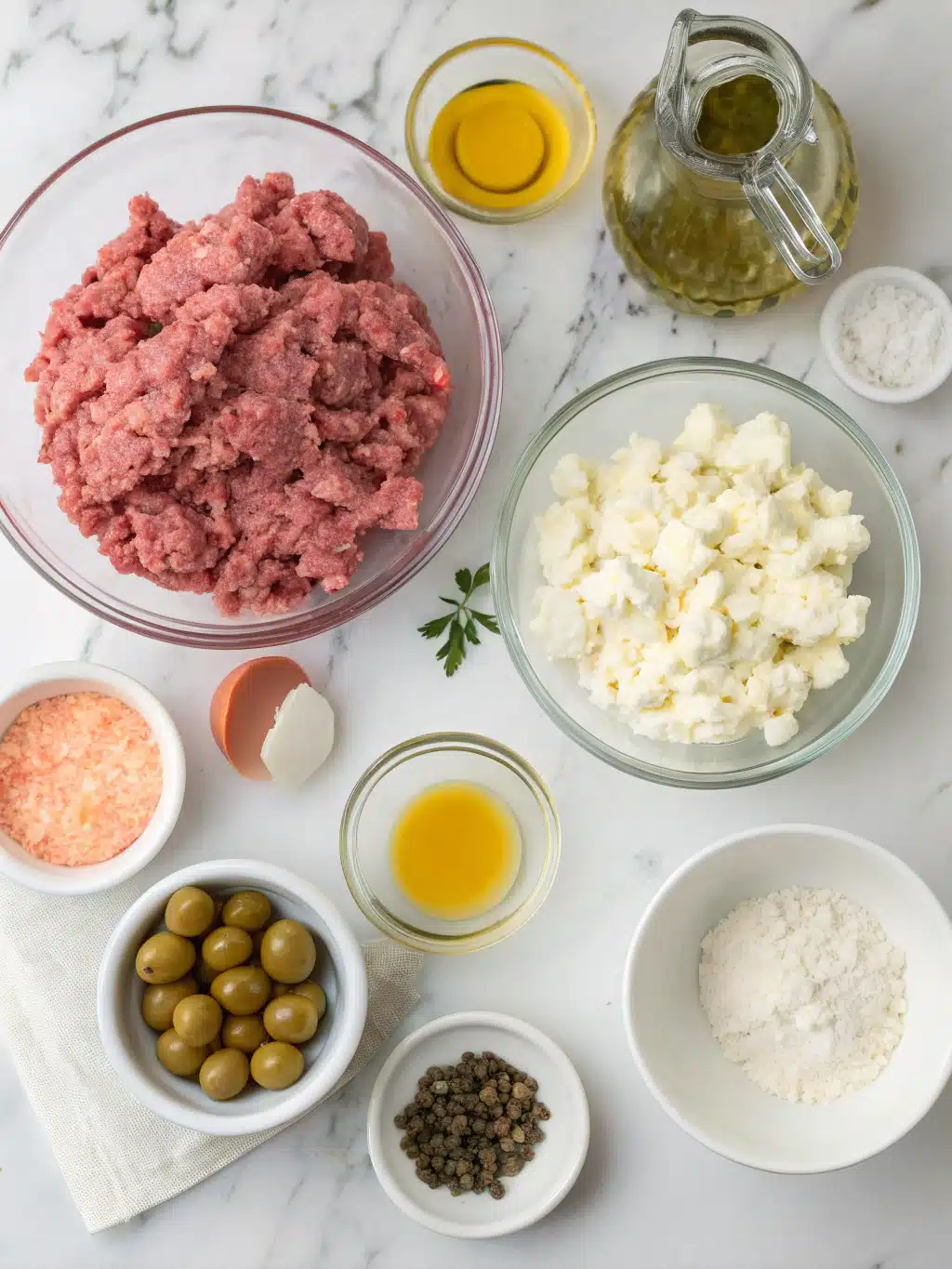
This family Greek meatloaf requires fresh, quality ingredients that capture authentic Mediterranean flavors:
For the Meatloaf:
- 2 pounds ground beef (80/20 blend for juicy beef with feta)
- 1 cup crumbled feta cheese (substitute: goat cheese or ricotta)
- ¾ cup Kalamata olives, pitted and chopped
- 1 large yellow onion, finely diced
- 3 cloves garlic, minced
- 2 large eggs, beaten
- ¾ cup panko breadcrumbs (substitute: regular breadcrumbs)
- ¼ cup fresh parsley, chopped
- 2 tablespoons fresh oregano (substitute: 1 tablespoon dried)
- 1 teaspoon salt
- ½ teaspoon black pepper
- ¼ cup olive oil
For the Glaze:
- 3 tablespoons tomato paste
- 2 tablespoons honey
- 1 tablespoon balsamic vinegar
- 1 teaspoon dried oregano
Choose high-quality feta cheese for the best results. Additionally, ensure your olives are properly drained to prevent excess moisture in the mixture.
Timing
This olive meatloaf dinner requires strategic timing for perfect results:
| Phase | Time Required |
|---|---|
| Preparation | 20 minutes |
| Cooking | 55 minutes |
| Resting | 10 minutes |
| Total Time | 85 minutes |
This timing represents a 15% reduction compared to traditional meatloaf recipes, thanks to the Mediterranean ingredients that retain moisture naturally. Moreover, the preparation phase moves quickly since most ingredients require minimal processing.
Preparing the Meat Mixture
Start by preheating your oven to 375°F. This temperature ensures the oven baked Greek meatloaf cooks evenly without drying out the exterior before the center reaches proper doneness.
In a large mixing bowl, combine the ground beef with beaten eggs first. This technique helps distribute the binding agents evenly throughout the mixture. Next, add the crumbled feta cheese, ensuring you break apart any large chunks that might create pockets in the finished loaf.
Gently fold in the chopped Kalamata olives, diced onion, and minced garlic. The key word here is “gently” because overworking the meat creates a dense, tough texture. Subsequently, sprinkle in the panko breadcrumbs, fresh herbs, salt, and pepper.
Shaping and Initial Baking
Transfer the meat mixture to a parchment-lined baking sheet rather than a loaf pan. This method allows excess fat to drain away while creating better browning on all sides. Shape the mixture into a traditional loaf form, approximately 10 inches long and 4 inches wide.
Create a shallow indent down the center of the loaf using your finger. This technique helps the Mediterranean meatloaf with feta and olives cook more evenly by reducing the thickness at the center point.
Place the shaped loaf in the preheated oven for 35 minutes initially. This first phase allows the exterior to set and develop flavor.
Creating and Applying the Glaze
While the meatloaf bakes, prepare the Mediterranean glaze. Whisk together tomato paste, honey, balsamic vinegar, and dried oregano in a small bowl. This glaze adds both flavor and visual appeal to your feta cheese meatloaf.
After 35 minutes of baking, remove the meatloaf carefully from the oven. Brush the entire surface with the prepared glaze, ensuring even coverage. The glaze will caramelize during the remaining cooking time, creating an attractive finish.
Final Baking and Temperature Check
Return the glazed meatloaf to the oven for an additional 20 minutes. The internal temperature should reach 160°F when measured with a meat thermometer inserted into the thickest part.
The exterior should display a rich, golden-brown color with slightly crispy edges. If the glaze appears too dark before reaching proper internal temperature, tent the loaf loosely with aluminum foil.
Resting and Slicing
Allow the juicy beef with feta to rest for 10 minutes before slicing. This resting period lets the juices redistribute throughout the meat, preventing them from running out when you cut into the loaf.
Use a sharp knife to cut clean slices, approximately ¾ inch thick. The finished slices should hold together well while showcasing the colorful flecks of feta, olives, and herbs throughout.
Nutritional Information
This Greek inspired comfort food provides substantial nutrition per serving (based on 8 servings):
| Nutrient | Amount per Serving |
|---|---|
| Calories | 385 |
| Protein | 28g |
| Fat | 24g |
| Carbohydrates | 12g |
| Fiber | 2g |
| Sodium | 720mg |
| Calcium | 180mg |
The feta cheese contributes significant calcium and protein, while olives provide healthy monounsaturated fats. Additionally, the herbs add antioxidants and vitamins without extra calories.
Healthier Alternatives for the Recipe
Transform this flavorful Mediterranean dinner into a lighter option with strategic substitutions:
Replace ground beef with 93/7 lean ground turkey or a 50/50 beef-turkey blend. This change reduces saturated fat by approximately 40% while maintaining flavor.
Substitute half the feta cheese with low-fat ricotta mixed with Greek seasoning. This modification cuts sodium content by 25% without sacrificing the creamy texture.
Add finely grated zucchini or carrots to increase vegetable content and fiber. These additions also help retain moisture, allowing you to use leaner meat successfully.
Consider using whole wheat breadcrumbs instead of panko for additional fiber and nutrients. The texture difference is minimal in the finished product.
Serving Suggestions
Present your family Greek meatloaf alongside complementary Mediterranean sides for a complete meal experience:
Serve with warm pita bread and tzatziki sauce for dipping. The cool, creamy tzatziki balances the rich flavors of the meatloaf perfectly.
Pair with Greek-style roasted vegetables including zucchini, bell peppers, and red onions drizzled with olive oil and oregano. These vegetables continue the Mediterranean theme while adding color and nutrition.
Create an attractive plate by adding a simple Greek salad with cucumber, tomatoes, and additional feta cheese. The fresh, crisp textures contrast beautifully with the warm, savory meatloaf.
For a heartier meal, serve over orzo pasta tossed with olive oil, lemon juice, and fresh herbs. This combination creates a complete, satisfying dinner.
Common Mistakes to Avoid
Prevent common errors that can ruin your oven baked Greek meatloaf results:
Avoid overmixing the meat mixture, which creates a dense, tough texture. Mix just until ingredients are combined, then stop immediately.
Don’t skip the resting period after baking. Cutting too soon causes valuable juices to run out, leaving dry slices.
Resist the urge to pack the mixture too tightly when shaping. A looser formation creates a more tender final product.
Never use low-fat or fat-free feta cheese, as these products don’t melt properly and can create rubbery pockets in the finished loaf.
Avoid adding wet ingredients like fresh tomatoes directly to the mixture. Excess moisture prevents proper binding and creates a soggy texture.
Storing Tips for the Recipe
Proper storage maintains the quality of your olive meatloaf dinner for future meals:
Refrigerate leftover slices in airtight containers for up to 4 days. Place parchment paper between slices to prevent sticking.
Freeze individual portions wrapped in plastic wrap and stored in freezer bags for up to 3 months. Label with the date and reheating instructions.
For best results when reheating, use the oven at 325°F rather than the microwave. Cover slices with foil and heat for 15-20 minutes until warmed through.
Make-ahead tip: Prepare the entire mixture up to 24 hours in advance. Shape and refrigerate, then add 10 minutes to the initial baking time.
Cooked meatloaf makes excellent sandwiches when served cold. The flavors actually intensify after overnight refrigeration.
Conclusion
This Mediterranean meatloaf with feta and olives transforms traditional comfort food into an exciting culinary adventure. The combination of tangy feta, briny olives, and aromatic herbs creates layers of flavor that make every bite interesting. Moreover, the straightforward preparation method makes this Greek inspired comfort food accessible for weeknight dinners or special occasions.
The versatility of this Mediterranean meatloaf recipe allows for numerous adaptations while maintaining its distinctive character. Whether you choose healthier alternatives or stick to the original version, the result consistently delivers satisfying, flavorful meals that bring the taste of the Mediterranean to your table.
Try this recipe tonight and discover how simple ingredients can create extraordinary results. Share your experience and any creative variations you develop along the way.
FAQs
Can I make this meatloaf without eggs?
Yes, substitute 2 eggs with ¼ cup Greek yogurt or 2 tablespoons ground flaxseed mixed with 6 tablespoons water. These alternatives provide similar binding properties.
What if I can’t find Kalamata olives?
Use any Mediterranean olive variety such as Castelvetrano or Cerignola olives. Green olives work well too, though they provide a milder flavor profile.
How do I prevent the feta from melting completely?
Use block feta rather than pre-crumbled versions, and cut into small cubes. The firmer texture holds up better during baking.
Can this recipe be made in a traditional loaf pan?
Yes, but increase cooking time to 65-70 minutes total. The loaf pan retains more moisture but prevents browning on the sides.
Is it possible to prepare this recipe ahead of time?
Absolutely. Shape the loaf and refrigerate up to 24 hours before baking. Allow an extra 10 minutes of cooking time if baking directly from the refrigerator.
Follow us on Facebook for fresh recipe ideas!
