

The pan hisses as tender ground beef hits the surface, releasing an aroma that immediately transforms your kitchen into a warm haven. This is the magic of Ground Beef Japanese Curry, where comfort meets convenience in one satisfying bowl. Unlike traditional beef stew preparations that require hours of simmering, this mild curry recipe delivers deep, rich flavors in just 90 minutes. Furthermore, it creates the perfect comfort curry bowl that brings families together around the dinner table. Most importantly, this easy japanese dinner proves that weeknight cooking can be both simple and soul-warming.
Japanese curry differs significantly from its Indian or Thai counterparts. Additionally, it features a milder heat profile and a naturally sweet undertone that appeals to all ages. Consequently, this family friendly curry has become a staple in Japanese households since the late 1800s. Moreover, using ground beef instead of cubed meat reduces cooking time while maintaining that hearty curry rice meal satisfaction everyone craves.
Ingredients
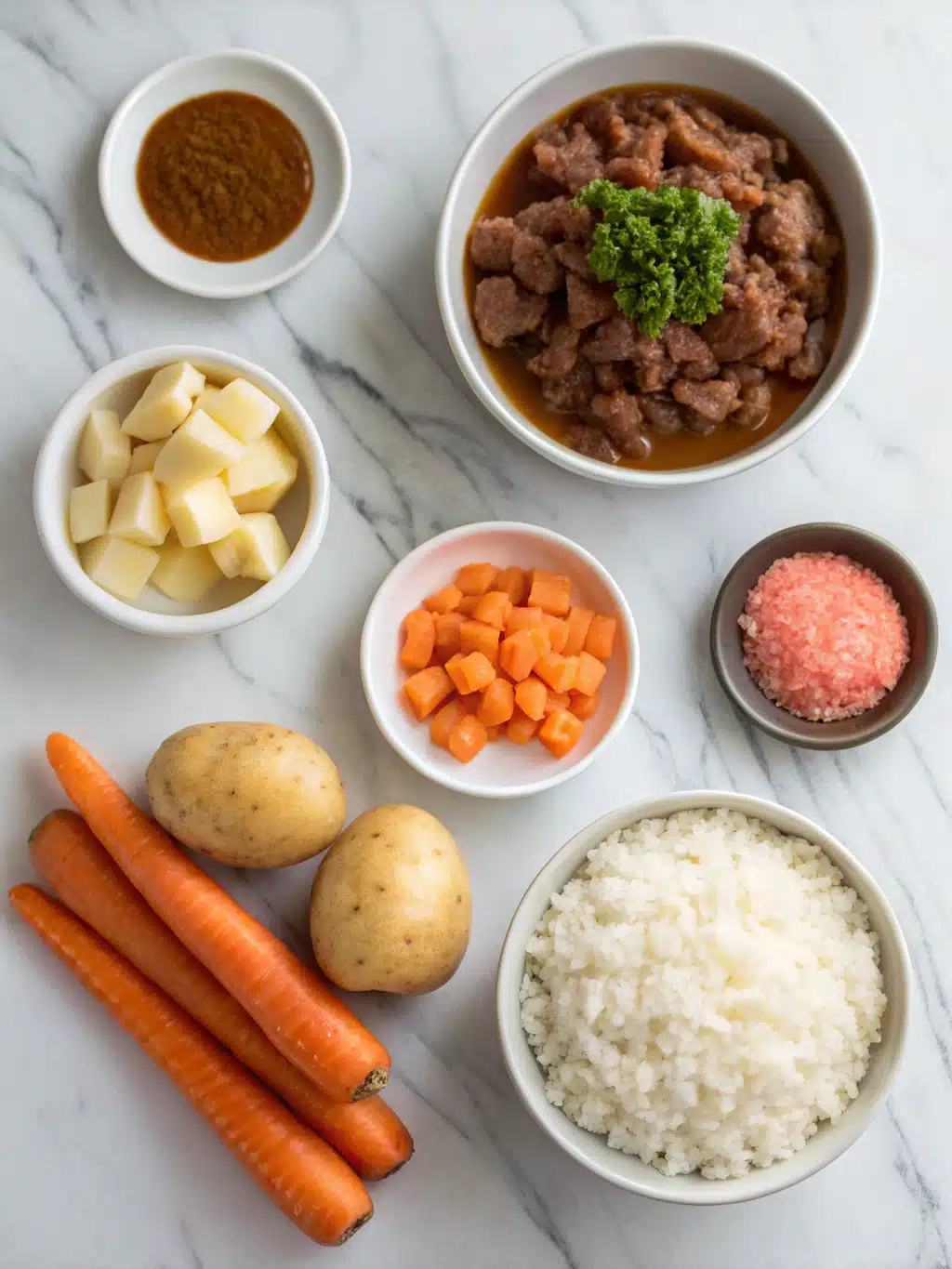
Creating this savory japanese curry requires simple, accessible ingredients that deliver maximum flavor impact. Below, you’ll find everything needed for this cozy curry beef stew:
Protein & Base:
- 1 lb ground beef (80/20 blend works best, or substitute with ground turkey)
- 2 medium onions, diced (sweet onions add natural sweetness)
- 3 carrots, cut into bite-sized chunks
- 2 medium potatoes, cubed (Yukon Gold or Russet varieties)
Curry Foundation:
- 4-5 Japanese curry roux blocks (Golden Curry or Vermont Curry brands)
- 3 cups beef stock (vegetable stock as alternative)
- 2 tablespoons vegetable oil
- 2 cloves garlic, minced
- 1 tablespoon grated fresh ginger
Flavor Boosters:
- 2 tablespoons tomato paste
- 1 tablespoon soy sauce
- 1 teaspoon Worcestershire sauce
- 1 bay leaf
For Serving:
- 4 cups cooked white rice (jasmine or short-grain preferred)
- Fresh scallions for garnish
Substitution Options: Replace beef stock with mushroom broth for deeper umami. Similarly, swap regular onions for shallots for a more delicate flavor profile.
Timing
This Ground Beef Japanese Curry takes approximately 90 minutes from start to finish, which is notably 20% faster than traditional beef curry recipes. Here’s the breakdown:
| Phase | Time Required |
|---|---|
| Prep Time | 15 minutes |
| Cooking Time | 75 minutes |
| Total Time | 90 minutes |
| Active Work | 30 minutes |
Importantly, most of the cooking happens hands-off while the curry simmers. Therefore, you can prepare rice, set the table, or handle other dinner preparations simultaneously.
Prep Time Breakdown (15 minutes)
- Dice vegetables: 8 minutes
- Measure seasonings: 3 minutes
- Brown ground beef: 4 minutes
Step 1: Prepare Your Mise en Place
Start by organizing all ingredients before cooking begins. First, dice onions into uniform pieces for even cooking. Next, cut carrots and potatoes into similar-sized chunks, roughly 1-inch pieces. Additionally, mince garlic and grate fresh ginger. This preparation step prevents overcooking while you scramble for ingredients later.
Pro Tip: Soak diced potatoes in cold water to remove excess starch, which prevents them from breaking down during cooking.
Step 2: Brown the Ground Beef
Heat vegetable oil in a large, heavy-bottomed pot over medium-high heat. Then, add ground beef, breaking it apart with a wooden spoon. Cook for 6-8 minutes until nicely browned. Importantly, don’t stir too frequently, as this allows proper browning to develop. Subsequently, the fond (brown bits) will add incredible depth to your japanese curry beef.
Essential Technique: Allow beef to sit undisturbed for 2-3 minutes between stirring sessions. This creates better flavor development.
Step 3: Build the Aromatic Base
Add diced onions to the pot with the browned beef. Cook for 5-6 minutes until onions become translucent and fragrant. Then, stir in minced garlic and grated ginger, cooking for another minute. Moreover, this combination creates the foundational flavors that make this mild curry recipe so appealing to families.
Timing Tip: If onions brown too quickly, reduce heat to medium. Burnt aromatics will create bitter flavors.
Step 4: Add Vegetables and Liquid
Incorporate carrots and potatoes into the pot, stirring gently to combine. Next, add tomato paste, cooking for 2 minutes to remove raw taste. Pour in beef stock gradually while stirring. Additionally, add soy sauce, Worcestershire sauce, and bay leaf. Bring the mixture to a gentle boil.
Stock Selection: Use low-sodium stock to control saltiness, since curry roux blocks contain salt.
Step 5: Simmer and Develop Flavors
Reduce heat to low and simmer for 45-50 minutes until vegetables are fork-tender. Stir occasionally to prevent sticking. During this time, the cozy curry beef stew develops its characteristic rich texture and deep flavor profile. Furthermore, the longer simmering time allows all ingredients to meld beautifully.
Consistency Check: If liquid reduces too quickly, add warm stock in 1/2-cup increments.
Step 6: Add Curry Roux and Final Seasoning
Remove bay leaf and reduce heat to low. Break curry roux blocks into smaller pieces, then whisk them into the simmering mixture until completely dissolved. Continue cooking for 10-15 minutes until the curry thickens to coat the back of a spoon. Taste and adjust seasoning as needed.
Roux Incorporation Tip: Add roux gradually to prevent lumps. Whisk constantly for smooth integration.
Nutritional Information
This hearty curry rice meal provides balanced nutrition per serving (based on 4 servings):
| Nutrient | Per Serving |
|---|---|
| Calories | 485 |
| Protein | 28g |
| Carbohydrates | 52g |
| Fat | 18g |
| Fiber | 6g |
| Sodium | 890mg |
| Iron | 15% DV |
| Vitamin A | 25% DV |
The combination of ground beef and vegetables provides complete proteins alongside essential vitamins and minerals. Additionally, carrots contribute beta-carotene, while potatoes offer potassium and vitamin C. Moreover, the moderate calorie count makes this suitable for regular family dinners.
Healthier Alternatives for the Recipe
Transform this family friendly curry into an even more nutritious meal with these simple substitutions:
Protein Swaps:
- Use 93/7 lean ground beef to reduce fat content by 30%
- Replace beef with ground turkey for lower calories
- Try plant-based ground meat for vegetarian option
Vegetable Additions:
- Include diced bell peppers for extra vitamin C
- Add mushrooms for more umami and fewer calories
- Incorporate frozen peas in final 5 minutes of cooking
Carbohydrate Modifications:
- Serve over cauliflower rice for low-carb version
- Use brown rice instead of white for added fiber
- Try quinoa as a protein-rich grain alternative
Sodium Reduction:
- Choose low-sodium curry roux blocks
- Use fresh herbs instead of additional salt
- Make homemade roux from scratch for complete control
Serving Suggestions
Present this comfort curry bowl in ways that make dinnertime special and memorable:
Traditional Presentation:
Serve curry over steamed white rice in deep bowls. Garnish with sliced scallions and a sprinkle of sesame seeds. Additionally, provide chopsticks alongside spoons for authentic experience.
Family-Style Options:
- Create a curry bar with various toppings: pickled vegetables, crispy onions, fresh herbs
- Serve with warm naan bread or crusty rolls for dipping
- Pair with simple cucumber salad for refreshing contrast
Meal Prep Friendly:
Portion curry and rice separately in meal prep containers. This prevents rice from becoming mushy. Furthermore, add fresh garnishes just before eating.
Special Occasion Ideas:
- Serve in hollowed-out bread bowls for fun presentation
- Create curry udon by serving over thick noodles
- Make curry hand pies using leftover filling
Common Mistakes to Avoid
Prevent these frequent errors to create the perfect savory japanese curry every time:
Overcooking Vegetables: Add harder vegetables like carrots first, then softer ones like potatoes. This prevents mushy textures that ruin the dish’s appeal.
Rushing the Browning Process: Properly browning ground beef takes patience. Additionally, resist the urge to stir constantly. Well-browned meat provides foundational flavors that can’t be replicated later.
Adding Roux Too Early: Always add curry roux blocks after vegetables are fully tender. Furthermore, adding them too soon can cause burning and bitter flavors.
Insufficient Simmering: Allow proper time for flavors to develop. Quick cooking produces flat-tasting curry. Moreover, the simmering process is when magic happens.
Wrong Heat Level: Keep heat at gentle simmer throughout cooking. High heat causes uneven cooking and potential burning.
Storing Tips for the Recipe
Maximize freshness and flavor with proper storage techniques for this easy japanese dinner:
Refrigerator Storage:
Store curry in airtight containers for up to 4 days. Keep rice separately to maintain textures. Additionally, curry actually tastes better the next day as flavors continue developing.
Freezer Guidelines:
Freeze curry for up to 3 months in freezer-safe containers. However, potatoes may change texture slightly after freezing. Consider removing potatoes before freezing if texture is important.
Reheating Instructions:
- Stovetop: Heat gently over low heat, stirring frequently
- Microwave: Use 50% power in 1-minute intervals, stirring between
- Add splash of stock if curry becomes too thick
Make-Ahead Strategy:
Prepare curry completely, then cool rapidly in refrigerator. This actually improves flavors and makes weeknight reheating simple.
Conclusion
This Ground Beef Japanese Curry recipe transforms ordinary ingredients into an extraordinary comfort curry bowl that brings warmth and satisfaction to any family dinner. The combination of tender ground beef, perfectly cooked vegetables, and rich curry sauce creates a hearty curry rice meal that appeals to all ages. Moreover, its mild heat profile and sweet undertones make it an ideal introduction to Japanese flavors for curry newcomers.
The beauty of this cozy curry beef stew lies in its simplicity and reliability. Furthermore, once you master these basic techniques, you can customize the recipe to suit your family’s preferences. Whether you’re seeking a quick weeknight dinner or a special weekend meal, this recipe delivers consistent, delicious results.
Try this recipe this week and experience how simple ingredients can create extraordinary comfort food. Share your results and variations in the comments below, and don’t forget to save this recipe for future family dinners.
FAQs
Can I make this curry spicier?
Absolutely! Add 1-2 teaspoons of sriracha or cayenne pepper to increase heat level. Start with small amounts and adjust to taste.
What if I can’t find Japanese curry roux blocks?
Create homemade roux by cooking equal parts butter and flour, then adding curry powder, turmeric, and garam masala. Use 1/4 cup of this mixture per cup of liquid.
How do I prevent the curry from being too thick?
Add warm stock or water gradually until desired consistency is reached. Remember, curry will thicken slightly as it cools.
Can I use frozen vegetables?
Yes, but add them during the last 15 minutes of cooking to prevent overcooking. Frozen vegetables require less cooking time than fresh.
Is this recipe suitable for meal prep?
Definitely! This curry actually improves in flavor after a day in the refrigerator. Store curry and rice separately for best results.
What’s the best rice to serve with this curry?
Short-grain white rice or jasmine rice work best. Their sticky texture helps hold the curry sauce beautifully.
Follow us on Facebook for fresh recipe ideas!
