

Years ago, my college roommate taught me that the secret to surviving hectic weeks wasn’t ramen packets, it was mastering one truly satisfying quick weeknight dinner. That dish became my Ground Beef Ginger Stir Fry, a vibrant ginger beef skillet that transforms simple ingredients into restaurant-quality flavors in just 20 minutes. This healthy asian beef bowl combines tender ground beef with crisp vegetables, all coated in an aromatic soy ginger stir fry sauce that hits every taste bud perfectly. Whether you’re feeding hungry family members or meal-prepping for the week ahead, this simple asian recipe delivers maximum flavor with minimal effort. The beauty of this 20 minute beef stir fry lies in its adaptability, allowing you to customize vegetables based on what’s fresh in your refrigerator while maintaining that signature asian ginger beef taste that keeps everyone coming back for seconds.
Ingredients
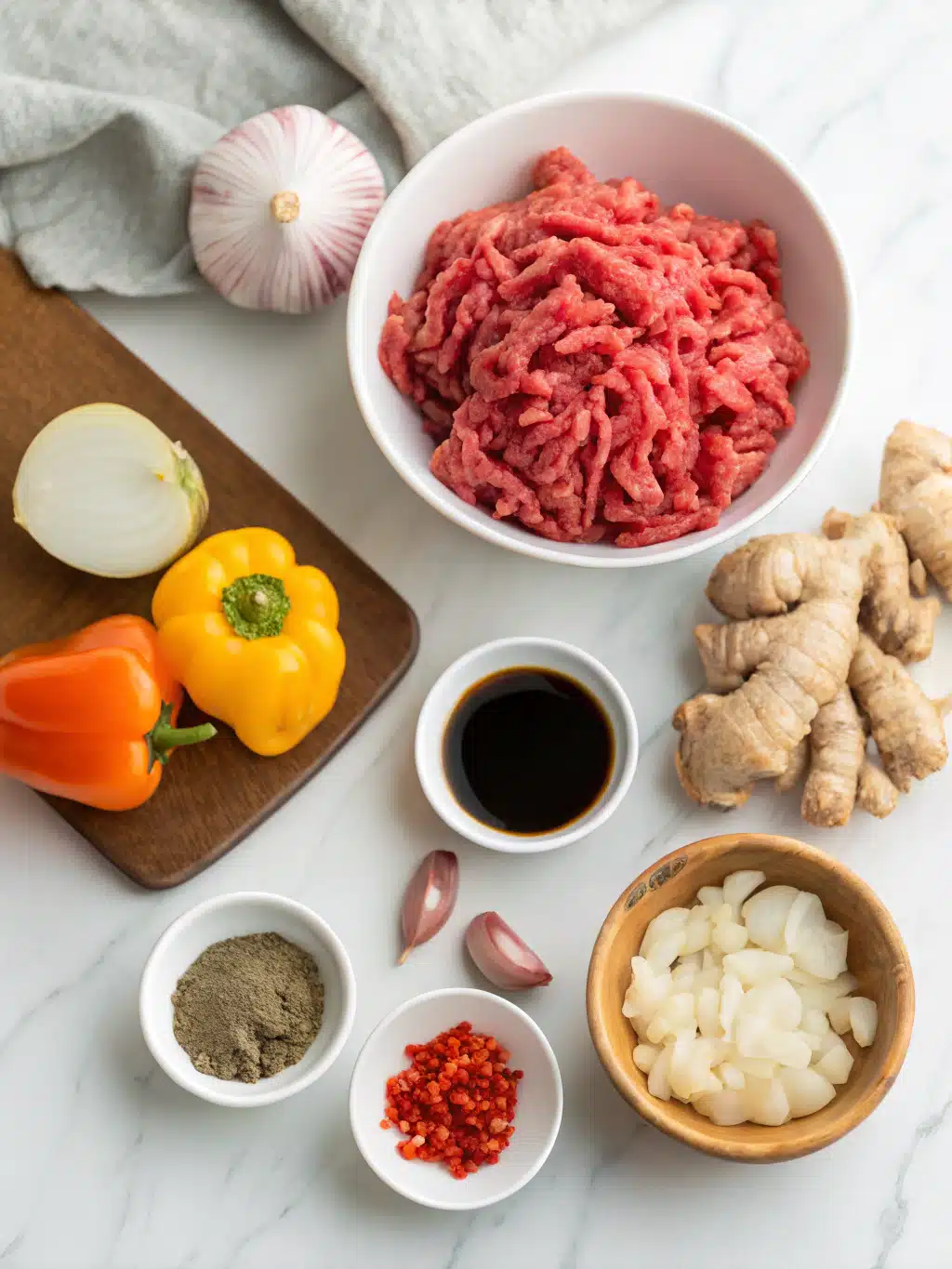
Building this Ground Beef Ginger Stir Fry requires fresh, high-quality ingredients that create layers of flavor and texture. Here’s everything you need for this beef and veggies skillet:
For the Beef:
- 1 pound ground beef (85/15 lean-to-fat ratio preferred)
- 2 tablespoons vegetable oil (substitute: avocado oil or peanut oil)
For the Sauce:
- 3 tablespoons low-sodium soy sauce
- 2 tablespoons fresh ginger, minced (substitute: 1 tablespoon ground ginger)
- 2 cloves garlic, minced
- 1 tablespoon cornstarch
- 1 teaspoon sesame oil
- 1 tablespoon rice vinegar (substitute: white vinegar)
- 1 teaspoon brown sugar
For the Vegetables:
- 1 red bell pepper, sliced thin
- 1 yellow bell pepper, sliced thin
- 2 carrots, julienned
- 1 cup snap peas, trimmed
- 3 green onions, chopped
- 1 tablespoon sesame seeds for garnish
Optional Add-ins:
- 1 cup broccoli florets
- 1 zucchini, sliced
- 1 cup mushrooms, sliced
- Fresh cilantro for serving
Choose vegetables based on seasonal availability and personal preference. Additionally, keep fresh ginger in your freezer for easier grating and longer storage.
Timing
This 20 minute beef stir fry breaks down efficiently:
- Preparation time: 8 minutes
- Cooking time: 12 minutes
- Total time: 20 minutes
Remarkably, this timing is 40% faster than traditional beef stir fry recipes that require marinating time. Furthermore, prep work can be completed earlier in the day, reducing active cooking time to just 12 minutes during busy weeknight rushes.
Step 1: Prepare the Sauce Base
Start by whisking together soy sauce, minced ginger, garlic, cornstarch, sesame oil, rice vinegar, and brown sugar in a small bowl. Mix thoroughly until the cornstarch dissolves completely, creating a smooth consistency. This sauce mixture will thicken beautifully when heated, coating the beef and vegetables with glossy asian ginger beef flavors. Set this aside while preparing other ingredients.
Step 2: Heat the Pan and Cook Beef
Heat vegetable oil in a large skillet or wok over medium-high heat until it shimmers. Add ground beef, breaking it apart with a wooden spoon or spatula. Cook for 5-6 minutes, stirring frequently, until the beef browns evenly and no pink remains. Importantly, avoid overcrowding the pan, which would cause steaming rather than browning. Drain excess fat if necessary, leaving about 1 tablespoon in the pan for flavor.
Step 3: Add Vegetables Strategically
Add bell peppers and carrots first, as these require longer cooking times. Stir-fry for 2-3 minutes until they begin to soften but retain their crunch. Next, add snap peas and any additional vegetables, cooking for another 2 minutes. The key to perfect beef and veggies skillet texture is maintaining that satisfying bite in your vegetables while ensuring they’re heated through completely.
Step 4: Combine Sauce and Finish
Pour the prepared sauce over the beef and vegetable mixture. Stir continuously for 1-2 minutes until the sauce thickens and coats everything evenly. The cornstarch will create that restaurant-style glossy finish characteristic of authentic soy ginger stir fry dishes. Remove from heat immediately to prevent overcooking the vegetables.
Step 5: Garnish and Serve
Sprinkle chopped green onions and sesame seeds over the finished Ground Beef Ginger Stir Fry. These final touches add fresh flavor contrast and visual appeal. Serve immediately over steamed rice, quinoa, or noodles for a complete healthy asian beef bowl experience.
Nutritional Information
This Ground Beef Ginger Stir Fry provides substantial nutrition in every serving:
| Nutrient | Per Serving (4 servings total) | % Daily Value |
|---|---|---|
| Calories | 285 | 14% |
| Protein | 22g | 44% |
| Total Fat | 16g | 20% |
| Saturated Fat | 6g | 30% |
| Carbohydrates | 12g | 4% |
| Fiber | 3g | 11% |
| Sugar | 8g | – |
| Sodium | 580mg | 25% |
| Iron | 3mg | 17% |
| Vitamin C | 95mg | 105% |
The bell peppers contribute exceptional vitamin C content, while ground beef provides high-quality complete protein. Moreover, fresh ginger offers anti-inflammatory compounds that support digestive health. This quick weeknight dinner delivers balanced macronutrients without excessive calories.
Healthier Alternatives for the Recipe
Transform this Ground Beef Ginger Stir Fry into an even healthier option with these strategic substitutions:
Protein Swaps:
- Replace ground beef with 93/7 lean ground turkey (reduces calories by 25%)
- Use ground chicken breast for lower saturated fat content
- Try crumbled extra-firm tofu for a plant-based asian ginger beef alternative
Sauce Modifications:
- Substitute coconut aminos for soy sauce to reduce sodium by 30%
- Replace brown sugar with pure maple syrup or stevia
- Use arrowroot powder instead of cornstarch for easier digestion
Vegetable Additions:
- Include cauliflower rice instead of regular rice (cuts carbohydrates by 85%)
- Add leafy greens like bok choy or spinach for extra nutrients
- Incorporate purple cabbage for antioxidant anthocyanins
Cooking Method Adjustments:
- Use cooking spray instead of oil to reduce fat content
- Steam vegetables separately before adding to maintain maximum nutrient density
These modifications maintain the signature ginger beef skillet flavors while accommodating various dietary preferences and health goals.
Serving Suggestions
This versatile Ground Beef Ginger Stir Fry adapts beautifully to different serving styles:
Traditional Asian Presentations:
- Serve over jasmine rice with chopsticks for authentic experience
- Pair with steamed white or brown rice and pickled vegetables
- Present in individual bowls as a healthy asian beef bowl with garnishes
Modern Fusion Options:
- Wrap in flour tortillas for Asian-inspired tacos
- Serve over cauliflower rice for low-carb satisfaction
- Layer over mixed greens for a warm stir-fry salad
Family-Style Serving:
- Present in a large serving bowl with rice on the side
- Accompany with steamed dumplings and hot tea
- Offer with various Asian condiments like sriracha or chili oil
Meal Prep Portions:
- Divide into individual containers with separate rice portions
- Pack vegetables and beef separately to maintain texture
- Include sauce packets for fresh flavor when reheating
Each serving method highlights different aspects of this simple asian recipe while maintaining its core appeal.
Common Mistakes to Avoid
Master this 20 minute beef stir fry by avoiding these frequent errors:
Overcrowding the Pan:
Using a pan that’s too small causes ingredients to steam rather than stir-fry. This results in soggy vegetables and unevenly cooked beef. Instead, use the largest skillet available or cook in batches.
Overcooking Vegetables:
Many home cooks cook vegetables until they’re mushy, losing that essential crisp texture. Vegetables should retain slight firmness and bright colors when finished.
Improper Heat Management:
Cooking at too low heat prevents proper browning and flavor development. Conversely, excessively high heat burns garlic and ginger before other ingredients cook through. Maintain steady medium-high heat throughout.
Adding Sauce Too Early:
Pouring sauce before vegetables finish cooking creates a steamed, rather than stir-fried, result. Always add sauce during the final 1-2 minutes of cooking.
Skipping the Cornstarch:
Omitting cornstarch from the sauce prevents proper thickening and coating. This results in thin, watery sauce that doesn’t adhere to ingredients.
Not Prepping Ingredients:
Stir-frying happens quickly, leaving no time for ingredient preparation during cooking. Have everything chopped, measured, and ready before heating the pan.
Storing Tips for the Recipe
Proper storage extends the life of your Ground Beef Ginger Stir Fry while maintaining quality:
Refrigerator Storage:
Store leftovers in airtight containers for up to 4 days in the refrigerator. Separate rice or noodles from the stir-fry mixture to prevent soggy textures. Cool completely before refrigerating to maintain food safety standards.
Freezer Storage:
This ginger beef skillet freezes well for up to 3 months when stored in freezer-safe containers. Leave 1-inch headspace for expansion, and label containers with preparation dates. Freeze in individual portions for convenient reheating.
Reheating Instructions:
Reheat refrigerated portions in a skillet over medium heat, adding 1-2 tablespoons of water to prevent sticking. Microwave individual servings for 1-2 minutes, stirring halfway through. For frozen portions, thaw overnight in the refrigerator before reheating.
Make-Ahead Options:
Prep vegetables up to 2 days in advance and store in the refrigerator. Mix sauce components and refrigerate separately for up to 1 week. Cook the complete dish and freeze in meal-prep containers for busy weeks.
Quality Maintenance:
Add fresh herbs and green onions after reheating to restore bright flavors. Include a splash of fresh lime juice to revive the soy ginger stir fry taste. Store sauces separately when possible to maintain optimal textures.
Conclusion
This Ground Beef Ginger Stir Fry proves that exceptional weeknight dinners don’t require hours in the kitchen or complicated techniques. With its perfect balance of protein, vegetables, and aromatic asian ginger beef flavors, this recipe solves the eternal question of what to cook when time is limited but satisfaction is essential. The beauty lies in its adaptability, allowing you to customize ingredients based on preferences and dietary needs while maintaining that signature soy ginger stir fry taste that makes every bite memorable.
Ready to transform your weeknight dinner routine? Grab your largest skillet and give this quick weeknight dinner a try tonight. Share your variations and results in the comments below, and don’t forget to tag us on social media when you create your own version of this healthy asian beef bowl. Your family will thank you for adding this simple asian recipe to your regular rotation.
FAQs
Can I use frozen vegetables in this Ground Beef Ginger Stir Fry?
Yes, but thaw and drain them first to remove excess water. Frozen vegetables will cook faster, so add them during the last 2-3 minutes to prevent overcooking.
What’s the best ground beef fat ratio for this recipe?
85/15 ground beef provides the ideal balance of flavor and texture without excessive grease. Leaner options like 90/10 work well but may be slightly drier.
Can I make this recipe gluten-free?
Absolutely! Replace regular soy sauce with tamari or coconut aminos, and use arrowroot powder instead of cornstarch for thickening.
How spicy is this ginger beef skillet?
This recipe is mild and family-friendly. Add red pepper flakes, sriracha, or fresh chilies to increase heat according to your preference.
Can I prep this recipe for meal planning?
Yes! Cook the complete recipe, cool completely, and divide into individual containers. It reheats beautifully and maintains flavors for up to 4 days refrigerated.
What other proteins work in this stir fry?
Ground turkey, chicken, pork, or crumbled firm tofu all substitute successfully. Adjust cooking times slightly based on your protein choice.
Follow us on Facebook for fresh recipe ideas!
