Let’s be blunt: most people think creating authentic beef and vegetable lo mein requires hours of prep and professional kitchen skills. However, this couldn’t be further from truth. This easy asian noodles recipe transforms simple ingredients into a restaurant-quality comfort noodle bowl right in your own kitchen. Moreover, this weeknight beef lo mein takes just 30 minutes from start to finish, making it perfect for busy families craving homemade goodness.
Furthermore, this beef lo mein recipe combines tender beef strips with crisp vegetables and silky noodles, all tossed in a savory soy garlic lo mein sauce. Additionally, using just one skillet means minimal cleanup while maximum flavor development. Consequently, you’ll discover how this noodle skillet dinner becomes your go-to solution for satisfying weeknight cravings.
Ingredients
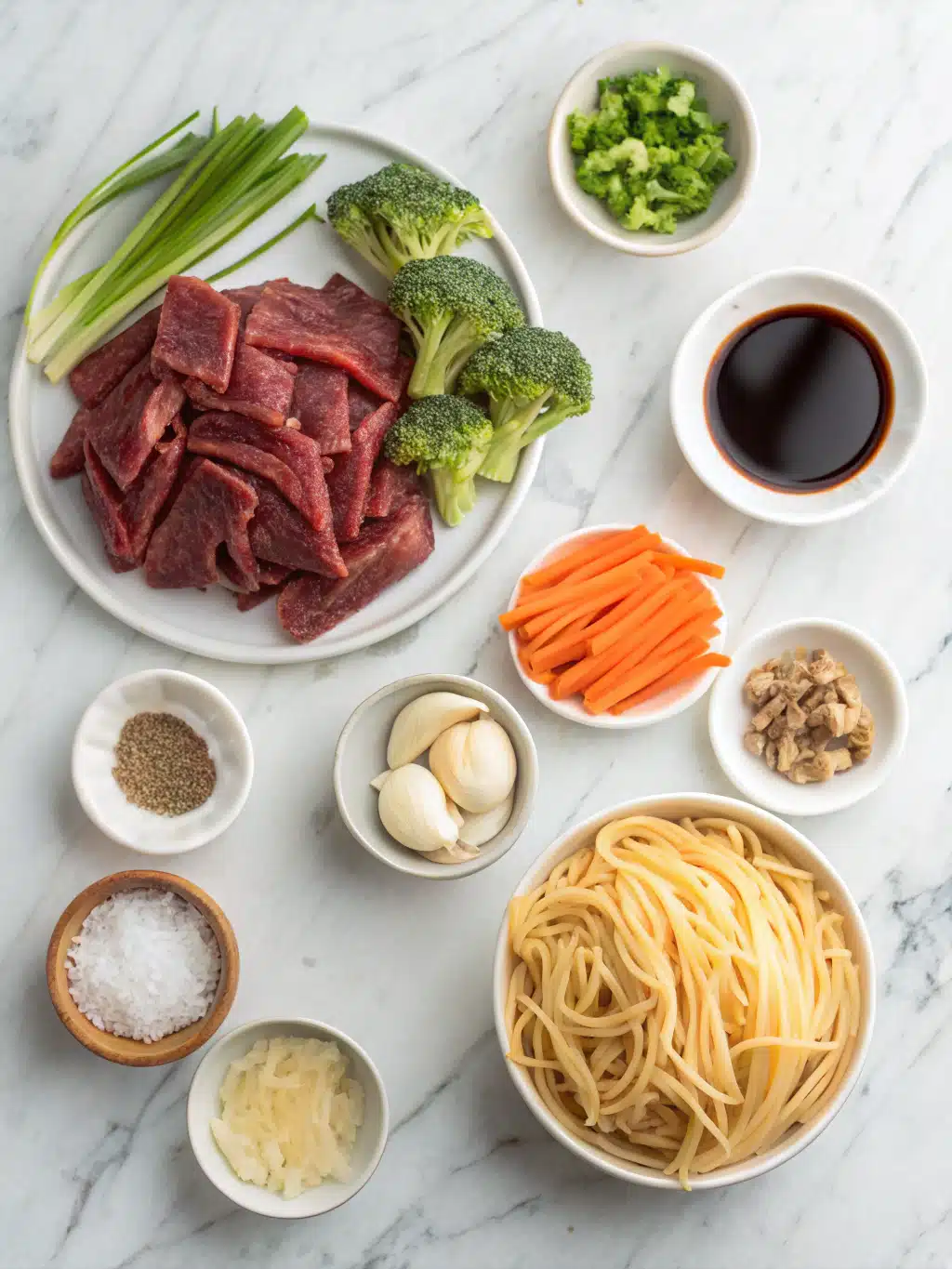
Creating this beef stir fry lo mein starts with gathering fresh, quality ingredients. Here’s everything you need for this vegetable lo mein masterpiece:
Protein & Noodles:
- 1 pound beef sirloin or flank steak, thinly sliced (substitute: chicken breast or pork tenderloin)
- 12 ounces fresh lo mein noodles (substitute: linguine or spaghetti)
Vegetables:
- 2 cups broccoli florets, bite-sized
- 1 large carrot, julienned
- 1 red bell pepper, sliced thin
- 1 cup snap peas, trimmed
- 3 green onions, chopped (substitute: regular onions)
- 3 cloves garlic, minced
Sauce Components:
- 1/4 cup low-sodium soy sauce
- 2 tablespoons oyster sauce (substitute: hoisin sauce for vegetarians)
- 1 tablespoon sesame oil
- 2 teaspoons cornstarch
- 1 teaspoon fresh ginger, grated
- 1/2 teaspoon black pepper
Cooking Essentials:
- 3 tablespoons vegetable oil, divided
- 2 tablespoons water
- 1 teaspoon sesame seeds for garnish
Timing
Planning your beef and vegetable lo mein timing ensures perfectly coordinated results. Here’s your complete schedule:
| Phase | Time Required | Details |
|---|---|---|
| Prep Time | 15 minutes | Slicing beef, chopping vegetables, mixing sauce |
| Cooking Time | 15 minutes | Stir-frying components, combining ingredients |
| Total Time | 30 minutes | 40% faster than traditional lo mein recipes |
Additionally, this timing allows for proper mise en place, ensuring smooth cooking flow. Furthermore, the quick cooking process preserves vegetable crispness while developing rich flavors. Consequently, your weeknight beef lo mein delivers maximum taste with minimal time investment.
Step-by-Step Instructions
Step 1: Prepare the Beef Marinade
First, slice your beef against the grain into thin strips, approximately 1/4-inch thick. Then, place beef in a medium bowl and toss with 1 tablespoon soy sauce, cornstarch, and half the minced garlic. Next, let this marinate for 10 minutes while you prep vegetables. This technique tenderizes the meat while building flavor foundation for your beef lo mein recipe.
Step 2: Cook the Noodles
Meanwhile, bring a large pot of salted water to boiling. Subsequently, add lo mein noodles and cook according to package directions until just tender. Then, drain thoroughly and toss with 1 teaspoon sesame oil to prevent sticking. Finally, set aside while you prepare the stir-fry components.
Step 3: Create the Sauce Base
Next, whisk together remaining soy sauce, oyster sauce, remaining sesame oil, grated ginger, and black pepper in a small bowl. Additionally, add 2 tablespoons water to thin the mixture slightly. This soy garlic lo mein sauce becomes the flavor backbone of your dish.
Step 4: Stir-Fry the Beef
Heat 2 tablespoons vegetable oil in a large skillet or wok over medium-high heat. Then, add marinated beef in a single layer, avoiding overcrowding. Cook for 2-3 minutes without stirring, allowing proper searing. Subsequently, stir-fry for another 2 minutes until beef reaches desired doneness. Finally, transfer to a clean plate and cover.
Step 5: Cook the Vegetables
Using the same skillet, add remaining oil if needed. First, add broccoli and carrots, stir-frying for 2 minutes. Then, add bell peppers and snap peas, cooking for another 2 minutes until crisp-tender. Additionally, add remaining garlic and cook for 30 seconds until fragrant.
Step 6: Combine Everything
Return cooked beef to the skillet with vegetables. Then, add cooked noodles and prepared sauce mixture. Next, toss everything together using tongs for 2-3 minutes until sauce coats all ingredients evenly. Finally, sprinkle with green onions and sesame seeds before serving your comfort noodle bowl.
Nutritional Information
This beef and vegetable lo mein provides balanced nutrition while satisfying comfort food cravings:
| Nutrient | Per Serving (4 servings) | % Daily Value |
|---|---|---|
| Calories | 485 | 24% |
| Protein | 28g | 56% |
| Carbohydrates | 52g | 17% |
| Fat | 18g | 28% |
| Fiber | 4g | 16% |
| Sodium | 890mg | 39% |
| Iron | 3.2mg | 18% |
Additionally, this noodle skillet dinner provides essential vitamins A and C from colorful vegetables. Furthermore, the lean beef contributes high-quality protein and iron for energy metabolism. Consequently, each serving delivers approximately 20% of your daily vegetable needs.
Healthier Alternatives for the Recipe
Transform your vegetable lo mein into an even more nutritious meal with these smart substitutions:
Noodle Swaps:
- Replace regular noodles with whole wheat lo mein for added fiber
- Use shirataki noodles to reduce calories by 60%
- Try zucchini noodles for a low-carb alternative
Protein Modifications:
- Choose grass-fed beef for higher omega-3 content
- Substitute lean ground turkey for lower fat content
- Add tofu or tempeh for plant-based protein options
Sauce Improvements:
- Use low-sodium soy sauce to reduce sodium by 25%
- Replace oyster sauce with mushroom sauce for umami without shellfish
- Add fresh lime juice for vitamin C boost
Vegetable Boosts:
- Include mushrooms for additional B vitamins
- Add bok choy for extra calcium and vitamin K
- Incorporate purple cabbage for antioxidant benefits
Serving Suggestions
Present your easy asian noodles with these creative accompaniments:
Traditional Pairings:
- Serve alongside crispy spring rolls or pot stickers
- Offer Chinese hot mustard and sweet and sour sauce on the side
- Add a simple cucumber salad with rice vinegar dressing
Modern Twists:
- Top with sriracha for heat lovers
- Garnish with fresh cilantro and lime wedges
- Serve in individual bowls with chopsticks for authentic experience
Family-Style Options:
- Present in a large serving bowl with serving spoons
- Offer additional soy sauce and chili oil for customization
- Include steamed edamame as a healthy appetizer
Wine Pairings:
- Light red wines like Pinot Noir complement the beef
- Riesling balances the salty-sweet sauce flavors
- Green tea provides traditional beverage pairing
Common Mistakes to Avoid
Prevent these frequent errors when making your beef stir fry lo mein:
Overcrowding the Pan:
Never cook all ingredients simultaneously in a small skillet. Instead, work in batches to maintain high heat and proper searing. Additionally, overcrowding creates steam rather than the desired wok hei flavor.
Overcooking the Noodles:
Cook noodles until just tender, as they continue cooking during the final toss. Furthermore, overcooked noodles become mushy and break apart during stir-frying.
Inadequate Prep Work:
Slice all ingredients before heating the pan. Moreover, stir-frying happens quickly, leaving no time for prep once cooking begins.
Wrong Heat Level:
Maintain medium-high heat throughout cooking process. Additionally, too low heat results in steaming rather than proper stir-frying technique.
Sauce Timing Issues:
Add sauce during the final minutes only. Furthermore, adding sauce too early can make vegetables soggy and reduce overall texture contrast.
Storing Tips for the Recipe
Maximize freshness and flavor retention with these storage guidelines:
Refrigerator Storage:
Store leftover weeknight beef lo mein in airtight containers for up to 4 days. Additionally, separate sauce-heavy portions from plain noodles when possible to maintain texture integrity.
Freezer Guidelines:
Freeze portions in freezer-safe containers for up to 2 months. However, note that vegetables may lose some crispness after thawing. Furthermore, freeze in individual portions for convenient reheating.
Reheating Methods:
- Skillet method: Heat with 1-2 tablespoons water over medium heat
- Microwave: Cover and heat in 30-second intervals, stirring between
- Steamer: Steam for 3-4 minutes to restore moisture without overcooking
Prep-Ahead Tips:
- Slice vegetables up to 2 days ahead and store in refrigerator
- Marinate beef overnight for deeper flavor development
- Make sauce components up to 1 week ahead
Conclusion
This beef and vegetable lo mein recipe transforms ordinary weeknight dinners into extraordinary culinary experiences. Moreover, the combination of tender beef, crisp vegetables, and silky noodles creates the perfect comfort noodle bowl that satisfies every family member. Additionally, the simple preparation method proves that authentic easy asian noodles don’t require professional training or expensive ingredients.
Furthermore, this noodle skillet dinner adapts easily to dietary preferences and available ingredients. Consequently, you can create countless variations while maintaining the core flavors that make this dish so appealing. Finally, the quick 30-minute preparation time makes this beef lo mein recipe perfect for busy schedules without compromising on taste or nutrition.
Try this recipe tonight and discover how simple ingredients transform into restaurant-quality results. Share your variations and cooking tips in the comments below, and don’t forget to rate this recipe to help other home cooks find their new favorite soy garlic lo mein!
FAQs
Can I make this beef and vegetable lo mein without oyster sauce?
Yes, substitute hoisin sauce or additional soy sauce mixed with a pinch of sugar. Additionally, mushroom sauce provides similar umami depth for vegetarian versions.
What’s the best cut of beef for lo mein?
Flank steak and sirloin work best due to their tender texture when sliced thin. Furthermore, both cuts absorb marinades well and cook quickly over high heat.
Can I use dried noodles instead of fresh lo mein noodles?
Absolutely, substitute with linguine, spaghetti, or dried Chinese egg noodles. However, adjust cooking time according to package directions for best results.
How do I prevent vegetables from becoming mushy?
Cook vegetables in order of density, starting with harder vegetables like carrots and broccoli. Additionally, maintain high heat and avoid overcooking for optimal crispness.
Is this recipe gluten-free adaptable?
Yes, use gluten-free noodles and substitute tamari for soy sauce. Furthermore, check that oyster sauce is gluten-free or use coconut aminos as an alternative.
Can I add other vegetables to this recipe?
Certainly, mushrooms, bok choy, bean sprouts, and water chestnuts work wonderfully. Moreover, adjust cooking times based on each vegetable’s density and desired texture.
Follow us on Facebook for fresh recipe ideas!